In short
In Meta Ads, the 7-day click attribution setting suits considered purchases and cross-device journeys, while 1-day click suits impulse buys and gives faster feedback. This post compares the pros and cons of each in a table, explains how to choose based on your sales cycle and covers the January 2026 removal of 7-day and 28-day view windows from the API.
Contents7 sections
Choosing between the 7-day click and 1-day click attribution setting in Meta Ads (formerly Facebook Ads) depends on your campaign's goals. Consider what you sell, how long customers usually take to decide and whether you need fast feedback or a fuller picture of the customer journey.
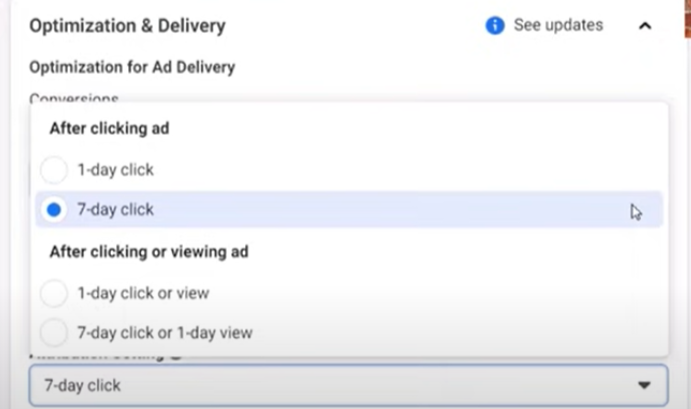
How do 7-day click and 1-day click compare?
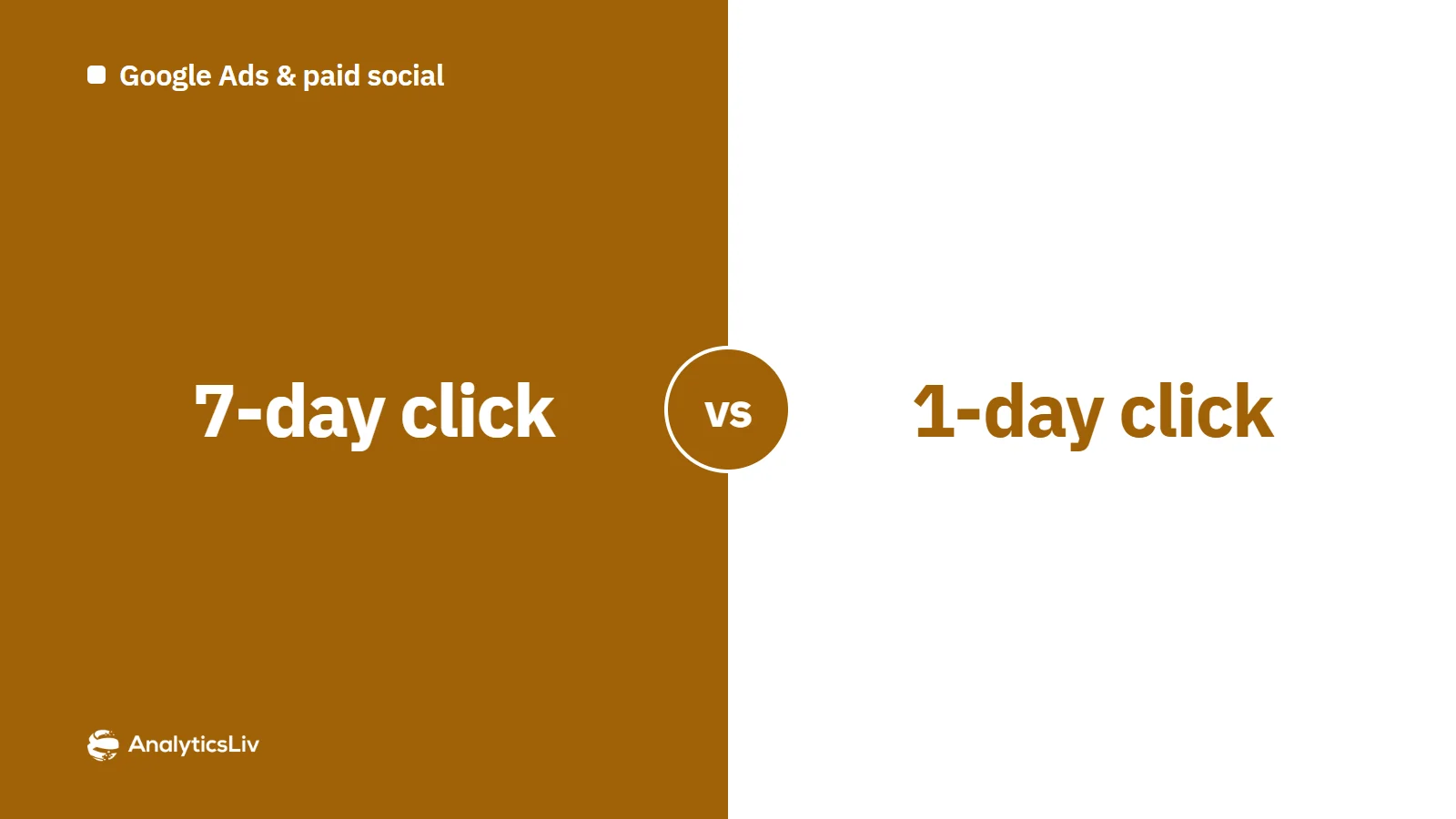
| 7-day click | 1-day click |
|---|---|
| Pros: fuller view of the customer journey, counts delayed and cross-device conversions, suits considered purchases. | Pros: fast feedback for quick changes, suits impulse buys and short sales cycles. |
| Cons: slower insights, may credit early clicks made well before the purchase, more than you need for quick-converting products. | Cons: little insight into longer journeys, weaker for considered purchases, may miss cross-device conversions. |
What are the pros of the 7-day click attribution setting?
- Fuller view: the 7-day window tracks interactions and conversions over a longer period, so it captures delayed conversions.
- Better for considered purchases: products or services that need research before purchase are better reflected, because the window allows for a longer decision.
- Cross-device conversions: users who see an ad on one device and convert on another are more likely to be counted.
- Longer-term impact: it gives more insight into the sustained effect of your ads over the week after a click.
What are the cons of the 7-day click attribution setting?
- Slower insights: because it covers a longer journey, you may not see the effect of campaign changes straight away, which makes quick reactions harder.
- Credit for early clicks: the longer window may credit clicks that happened well before the purchase.
- Less useful for quick conversions: products with short sales cycles, where people buy soon after clicking, gain little from a 7-day window.
What are the pros of the 1-day click attribution setting?
- Fast insights: you see the impact of your campaigns quickly, which helps when you need to adjust and optimize fast.
- Focus on short-term actions: products that sell through quick conversions or impulse purchases suit a 1-day window.
What are the cons of the 1-day click attribution setting?
- Limited view of longer journeys: it may miss touchpoints that influence conversions over a longer period.
- Weaker for considered purchases: for products that need more thought, it may not capture the full impact of your ads.
- Cross-device gaps: users who click on one device and convert on another may not be fully counted, so cross-device impact can be underestimated.
What changed for Meta attribution windows in 2026?
On January 12, 2026, Meta stopped returning the 7-day view and 28-day view attribution windows in the Ads Insights API. The 1-day click, 7-day click, 28-day click, 1-day view and 1-day engaged view windows remain available. If your reports or dashboards pulled view-through windows longer than one day, check them, because those columns no longer return data. The click windows compared in this post are not affected.
To compare Meta's numbers with what your own analytics records, see our guide to tracking Meta, TikTok and Google Ads conversions in GA4.
Which setting should you choose?
Pick 7-day click if customers usually take days to decide or switch devices before buying. Pick 1-day click if most purchases happen soon after the click and you need quick feedback. You can always test both settings and see which works better for your campaign.