In short
DV360 shows which insertion orders need work through the Optimization view, which groups them as underpacing, underperforming, on track, inactive or pacing unknown. Custom views, the Intelligence panel and email alerts add detail. Then narrow targeting: give engaged audiences their own line items, cut low-viewability sites and scale the categories and keywords that convert.
Contents6 sections
Display & Video 360 (DV360) has built-in tools that show which insertion orders and line items need attention: the Optimization view, custom views, the Intelligence panel and alerts. This post explains each one, then covers how to narrow audience, site and contextual targeting so your budget goes to what performs.
What does the Optimization view show in DV360?
The Optimization view shows whether your insertion orders and line items are on track to meet their spend and performance goals. In line item tables, it also suggests changes to improve pacing and performance, such as suggested budgets and bid prices.
In the insertion order table, the Optimization view groups insertion orders into:
- Underpacing: the insertion order is not on track to spend its entire budget by the end of its flight. It is spending 99% or less of the spend rate (pacing) it needs.
- Underperforming: the insertion order is not meeting the performance goals you set.
- Underpacing and underperforming: both of the above.
- On track: the insertion order is progressing as expected towards its spend and performance goals.
- Inactive: the insertion order is not currently serving.
- Pacing unknown: pacing data is not available for the insertion order.
How do custom views help?
In the insertion order table, the view drop-down offers options such as performance, optimization, summary and pacing, and lets you create custom views. Build a custom view to find insertion orders with budget at risk, so you can spot optimization and budget reallocation opportunities quickly.
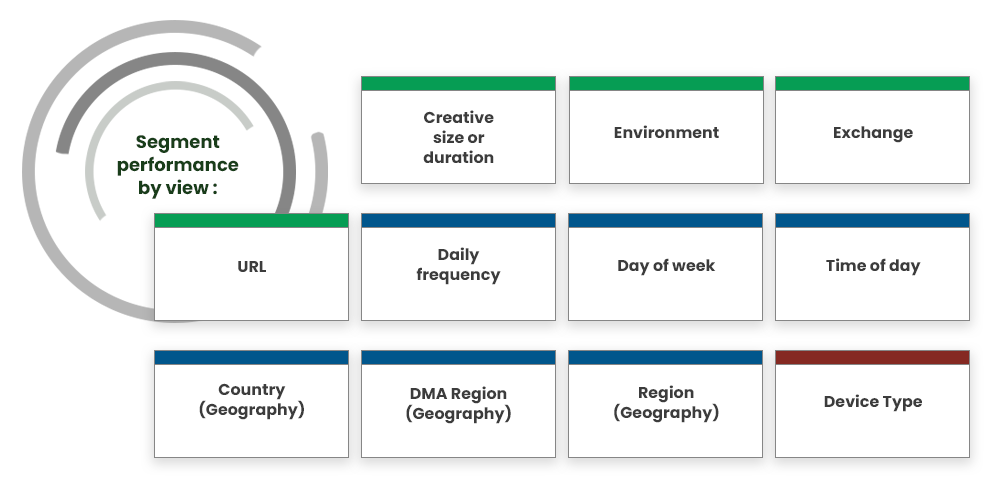
How do you segment performance by view?
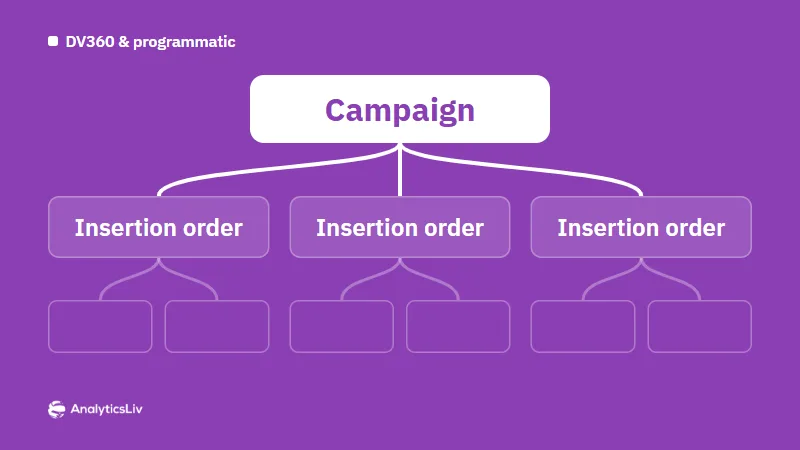
Set up a view that puts your campaign's key performance indicators (KPIs) in one place. You can build it at campaign level to watch your insertion orders, or at insertion order level to watch your line items.
The view lets you segment by content, audience and technology, so you can examine each area in turn and see more precisely what drives performance.
What is the Intelligence panel?
The Intelligence panel shows alerts and suggestions to improve campaign performance and fix problems, listing the most important ones first. They can cover:
- Low performance
- Underpacing and underspending
- Rejected creatives and policy violations
- Settings conflicts
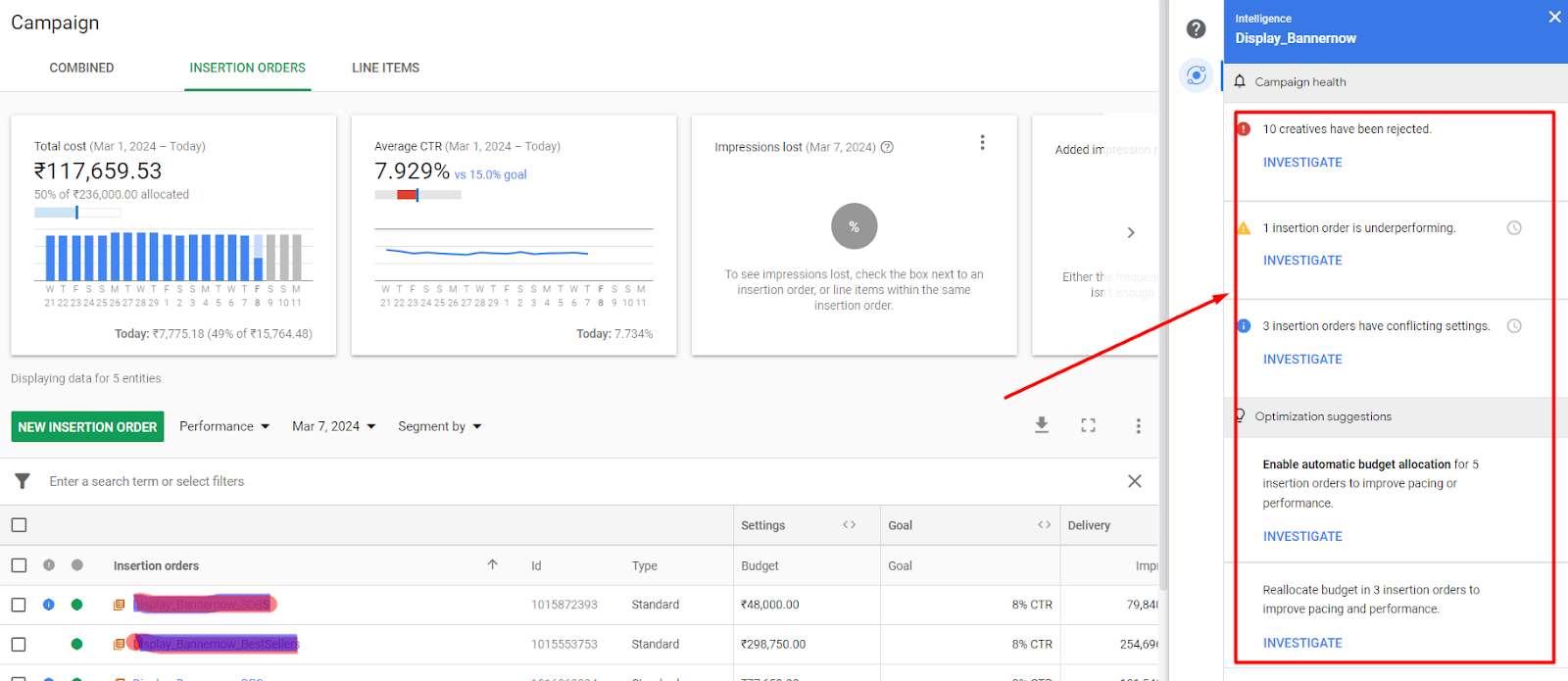
To see suggestions:
- Go to an advertiser or campaign and select "Suggestions" in the left menu. Google notes this option is available only for some accounts.
- Filter suggestions by category and apply them in bulk.
How do alerts work in Display & Video 360?
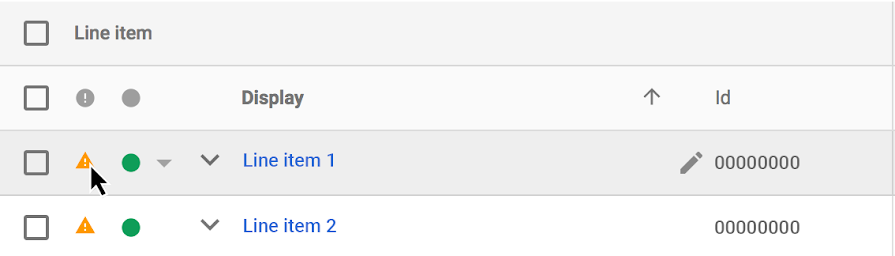
You can turn on alerts for a DV360 advertiser to be told about issues that need attention. Everyone with access to the advertiser sees alerts next to the items that triggered them. Hover over an alert for more detail. The example below shows line items with alerts.
How do you set alerts for your advertiser?
- From your DV360 advertiser, go to User management and email preferences > Alerts.
- Click Edit next to the alert you want.
- Choose an email preference:
- Don't send any email notifications for alerts of this type.
- Send an email each time this alert is triggered.
- Send one email per day summarising alerts of this type.
- Select the partners and advertisers you want notifications for.
- Click Apply.
- Click Save once you've updated all your notification settings.
Which alert types are available?
Budget and pacing
- No spend: a line item or insertion order is active but hasn't spent anything yesterday or today.
- Underpacing: an insertion order has missed its daily spend targets for two or more days and is projected to spend less than your chosen percentage of its budget by the end of its flight. The projection is based on the previous seven days.
Performance
- Significant performance change: performance against the insertion order's or line item's goal has changed notably.
- Underperforming: an insertion order is not meeting its performance goal.
Targeting changes
- Limited audience size: a line item targets an audience with very limited reach, which may stop it spending its budget. This alert needs the underpacing alert turned on too.
- Deals offline: one or more targeted deals haven't supplied any inventory in the last 24 hours, which may stop the budget spending. This alert also needs the underpacing alert.
- Restricted audience list: a line item targets one or more audience lists it isn't allowed to use.
Creative or YouTube ad
- Rejected creative: a line item uses one or more creatives rejected by at least one exchange.
- Restricted creative: a line item uses one or more creatives that are restricted from serving with certain audience lists.
- Creative rejected for Programmatic Guaranteed: a Programmatic Guaranteed deal uses one or more creatives the publisher rejected.
Advertiser spend threshold exceeded
Exceeded spend threshold: the advertiser's total spend yesterday (12:00 AM to 11:59 PM in the advertiser's time zone) passed the amount you set. To avoid false alarms, set the threshold at least three times the advertiser's expected daily spend.
How do you narrow targeting to optimize DV360 campaigns?
Once the tools above show where performance is weak, tighten targeting in three areas: audiences, sites and context.
1. Audience targeting
- Find engaged users: identify the people who clicked or converted.
- Give them priority: move engaged audiences into a dedicated line item within the insertion order and give it higher bids.
- Combine small segments: merge small audience segments with other audiences to widen reach.
Our guide to DV360 audience targeting covers the audience types in more depth.
2. Site performance
- Find top performers: use site performance reports to find sites with strong viewability and conversion rates.
- Cut weak sites: remove sites with poor viewability and no conversions, and focus budget on sites that deliver meaningful impressions and conversions.
- Check viewability: remove sites that aren't eligible for Active View measurement.
- Scale winners: duplicate line items for high-performing sites, starting with those with the best viewability.
- Exclude poor inventory: add low-performing URLs and apps to an exclusion list.
3. Contextual targeting
- Find high-yield categories: use category and keyword reports to find categories and keywords that drive clicks and conversions at a reasonable cost.
- Fix weak spots: look at low impressions, low CTR and high CPA to refine targeting.
- Check impression loss: make sure high performers aren't held back by impression loss.
- Check inventory: review available inventory to decide whether to add categories or parent categories.
- Check keyword reach: confirm that keyword-targeted audiences are large enough for the budget.
- Scale winners: move high-performing keyword targeting into separate line items with higher bids.
Summary
Use the Optimization view, custom views, the Intelligence panel and alerts to find the insertion orders and line items that are underpacing or underperforming. Then narrow audience, site and contextual targeting so more of the budget goes to the segments, sites and categories that convert.