In short
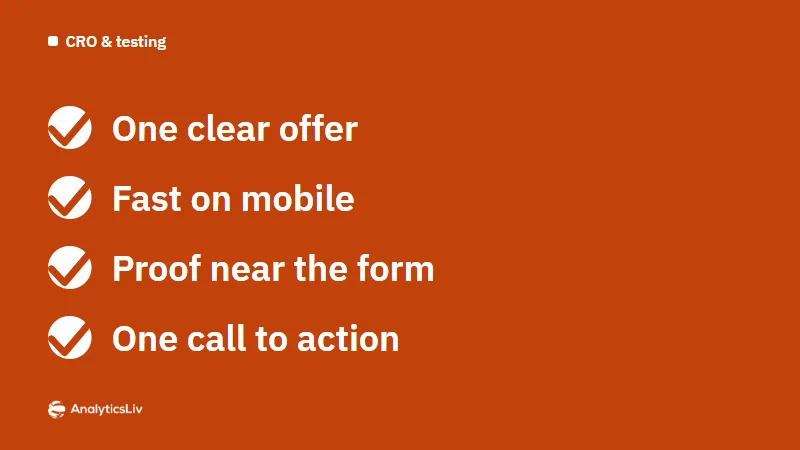
The eight CRO mistakes that most often hold conversions back in 2026 are a desktop-first design, generic CTAs, slow pages, an overcomplicated funnel, no micro-conversion tracking, missing trust signals, one message for every visitor and unstructured A/B tests. Each one has a practical fix, from mobile-first layouts and guest checkout to a hypothesis for every test.
Contents10 sections
Traffic alone doesn’t drive results; conversions do. Even with high-quality traffic, many websites still struggle to turn visitors into leads or customers.
The cause is often a handful of common CRO (conversion rate optimization) mistakes that quietly hold performance back. This post covers the eight we still see most often in 2026 and how to fix each one for a better return on ad spend, lower acquisition costs and a better user experience.
What are the most common CRO mistakes?
| Mistake | Fix |
|---|---|
| Treating mobile as an afterthought | Design mobile-first, with thumb-friendly buttons and fast mobile pages |
| Generic CTAs | Specific, benefit-led CTAs matched to the journey stage, then A/B tested |
| Ignoring page speed | Compress images, remove render-blocking scripts, use a CDN |
| An overcomplicated funnel | Fewer form fields, guest checkout, clear progress indicators |
| Not tracking micro-conversions | Track add-to-cart, scroll depth and video plays in GA4 or Clarity |
| No trust signals | Reviews, testimonials, security badges and clear refund policies |
| One message for everyone | Segment by source, behaviour or location and personalise offers |
| No structured A/B testing | A hypothesis per test, one change at a time, enough run time |
Mistake 1: Treating mobile as an afterthought
The problem: Still designing for desktop first? For most sites, mobile visitors are now the larger share of the audience, so a desktop-first design ignores the people most likely to arrive.
The fix:
- Design mobile-first, not just mobile-friendly
- Keep buttons thumb-accessible
- Use collapsible menus and simplified forms
- Prioritise page speed on mobile (Google’s Core Web Vitals matter)
Brands that don’t prioritise mobile CRO see bounce rates climb and conversions drop.
Mistake 2: Using generic CTAs
The problem: "Click Here" or "Submit" tells users nothing. CTAs should motivate, not confuse.
The fix: use action-oriented phrases such as:
“Get My Free Quote”
“Start My Trial”
“Book a Demo Now”
- A/B test different CTA styles, colours and placements
- Match the CTA to the user’s journey stage
Make your CTA specific, benefit-driven and urgent.
Mistake 3: Ignoring page speed and load time
The problem: slow-loading pages lose customers. Every extra second of waiting gives visitors a reason to leave before the page appears.
The fix:
- Use tools like Google PageSpeed Insights or GTmetrix
- Compress large images and eliminate render-blocking scripts
- Consider a content delivery network (CDN) for faster global load
Speed isn’t optional. Visitors expect it.
Mistake 4: Overcomplicating the conversion funnel
The problem: too many steps, confusing forms or forced sign-ups frustrate users.
The fix:
- Reduce friction: minimise form fields and autofill data when possible
- Offer guest checkout
- Use visual indicators for multi-step processes
- Keep messaging clear and expectations transparent
Make it easy. The fewer clicks to convert, the better.
Mistake 5: Not tracking micro-conversions
The problem: only tracking purchases or sign-ups? You’re missing valuable insights.
The fix:
- Track micro-actions like:
- Time on page
- Add-to-cart events
- Scroll depth
- Video plays
- Use tools like GA4, Hotjar or Microsoft Clarity
- Optimise based on these behaviours to nurture users toward the final conversion
Micro-conversions help you understand intent and improve the journey.
Mistake 6: Lack of trust signals
The problem: no matter how good your product is, users won’t convert without trust.
The fix:
- Display client logos, testimonials and real reviews
- Use trust badges (SSL, payment security, verified reviews)
- Highlight guarantees or refund policies
- Show real faces and behind-the-scenes content
Trust is what turns interest into a purchase.
Mistake 7: One-size-fits-all messaging
The problem: if you show the same content to every user, you miss personalisation opportunities.
The fix:
- Segment users based on source, behaviour or demographics
- Serve personalised offers (for example, returning visitors see abandoned cart reminders)
- Use dynamic content based on location or browsing history
Visitors now expect content that fits them.
Mistake 8: No structured A/B testing
The problem: random tests without a strategy waste time and data.
The fix:
- Form a clear hypothesis for every test
- Test one element at a time (CTA, headline, layout)
- Run tests long enough for statistically valid results
CRO is a process, not a guessing game. For a fuller plan, see our guide to conversion rate optimization strategies.
Final thoughts
Your conversion rate is your growth engine.
Ignoring CRO, or doing it wrong, wastes traffic, budget and potential. With the right fixes, you can make real improvements in leads, sales and user satisfaction.