In short
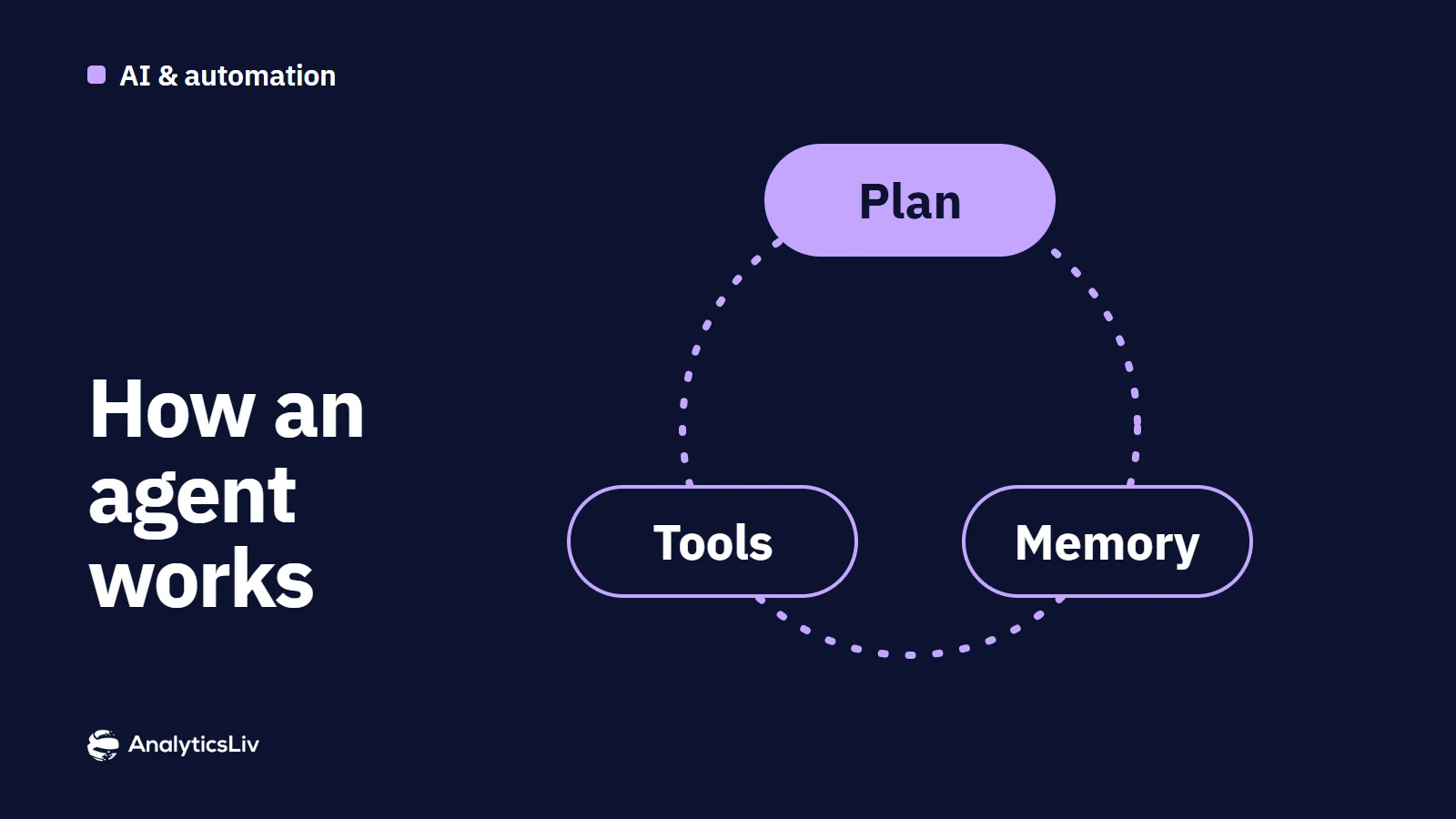
Agentic AI systems complete multi-step goals using three parts. Planning breaks a goal into ordered steps. Memory keeps short-term context within a task and long-term knowledge such as documents, preferences and past results. Tools such as APIs, databases, web search and code execution let the agent act. The agent repeats plan, act and remember until the task is done.
Contents5 sections
Agentic AI represents the next step in the evolution of artificial intelligence. Unlike traditional AI systems that simply respond to prompts, agentic AI systems can plan tasks, remember past information, and use external tools to accomplish complex goals autonomously. These capabilities allow AI agents to perform multi-step workflows similar to how humans approach problem-solving.
At the core of most agentic AI systems are three fundamental components: planning, memory, and tools.
1. Planning: Turning Goals into Actions
Planning allows an AI agent to break down a high-level objective into smaller, manageable steps. When given a task, the agent first analyses the goal and determines the sequence of actions required to complete it.
For example, if an AI agent is asked to create a marketing report, it might plan the following steps:
- Fetch campaign data from APIs
- Analyze performance metrics
- Generate insights
- Create a summary report
This ability to reason through tasks step-by-step enables agentic AI to handle complex workflows instead of performing a single action.
2. Memory: Learning from Context
Memory enables AI agents to retain important information across interactions. Without memory, an AI system would treat every request as a completely new task.
Agentic systems generally use two types of memory:
- Short-term memory – Stores context within a conversation or workflow.
- Long-term memory – Stores knowledge such as documents, user preferences, or previous results.
For example, an AI assistant analyzing marketing campaigns may remember previous performance benchmarks or brand guidelines, allowing it to generate more accurate recommendations over time.
3. Tools: Interacting with the Real World
Tools allow AI agents to extend beyond the capabilities of the language model. Instead of relying only on text generation, the agent can call external systems such as:
- APIs
- Databases
- Web search
- Code execution environments
- Automation platforms
By combining reasoning with tool usage, agentic AI can perform real-world tasks like retrieving data, running analysis, sending emails, or updating dashboards.
Bringing It All Together
When planning, memory, and tools work together, AI agents can execute complex workflows autonomously. The process typically looks like this:
- Receive a goal from the user
- Create a plan to achieve the goal
- Use tools to gather information or perform actions
- Store important information in memory
- Iterate and refine the plan until the task is completed
This architecture allows agentic AI systems to behave less like simple chatbots and more like autonomous digital workers capable of handling sophisticated tasks.
The Future of Agentic AI
As AI models continue to improve, agentic systems will become increasingly powerful. From automating business workflows to managing complex data pipelines, AI agents are likely to become a core component of modern software systems.
Organizations that learn how to design systems combining planning, memory, and tools will be best positioned to unlock the true potential of agentic AI.